Horowai and the Silent Awa
The awa (river) was never truly quiet.
It murmured beneath the stones, laughed around the bends and sang to the children who played along its banks. At night, its voice softened to a gentle whisper as it carried fresh water through the valley.
Horowai had listened to that voice for as long as he could remember.
But this morning, the river was silent.
Horowai knelt beside the water and placed his hand beneath its surface. It was cold, but there was no familiar movement against his fingers.
Something was wrong.
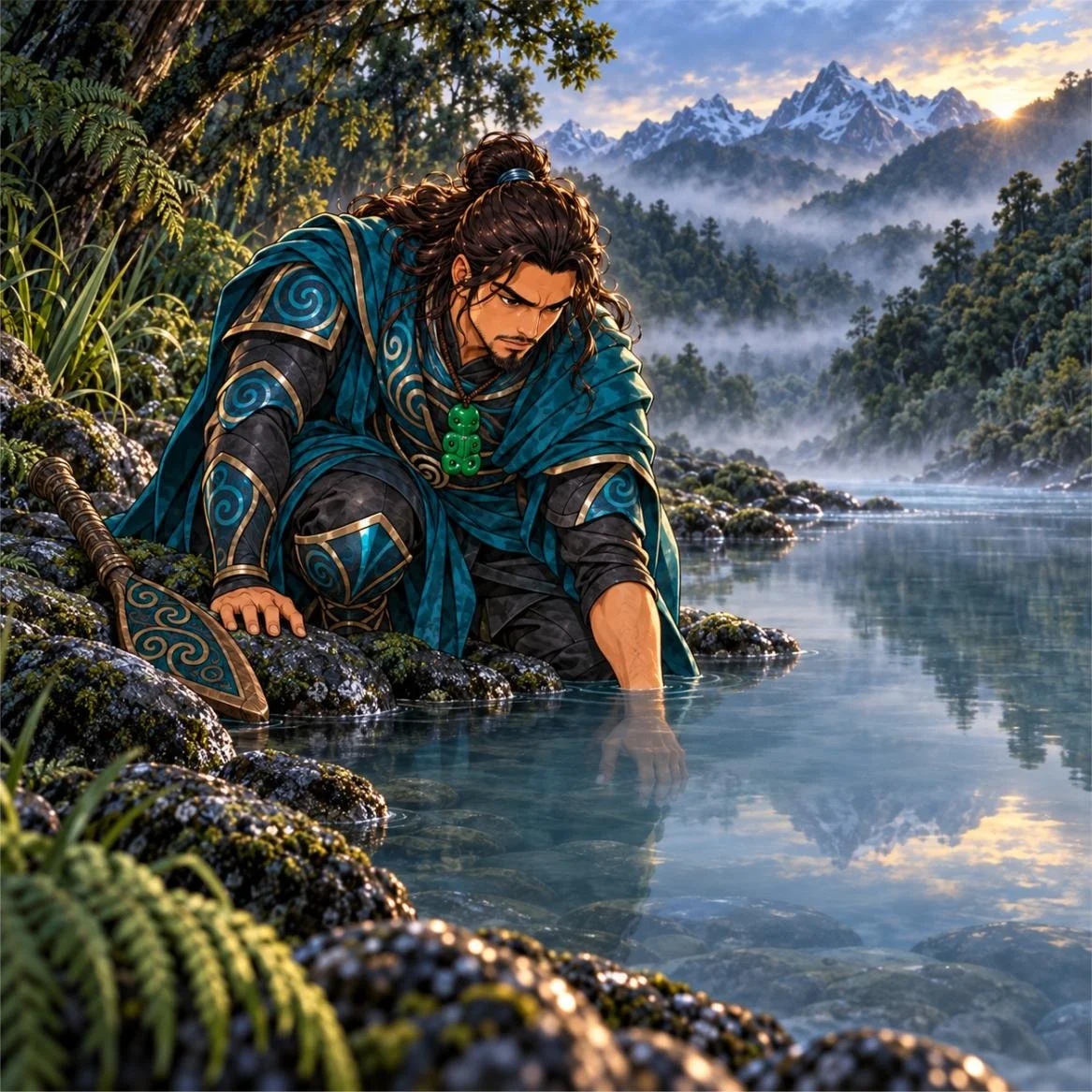
He closed his eyes and called upon Te Rongo o te Wai -the Voice of the Water.
For a moment, he heard nothing. Then a faint feeling travelled through the current: confusion, exhaustion and pain.
Horowai opened his eyes.
“I hear you,” he whispered. “I will help.”
He lifted his hoe and followed the river upstream.
Along the way, Horowai saw plants beginning to droop. Tuna (eels) sheltered beneath rocks instead of moving through the current. Children who usually played beside the water had been called away by their parents.
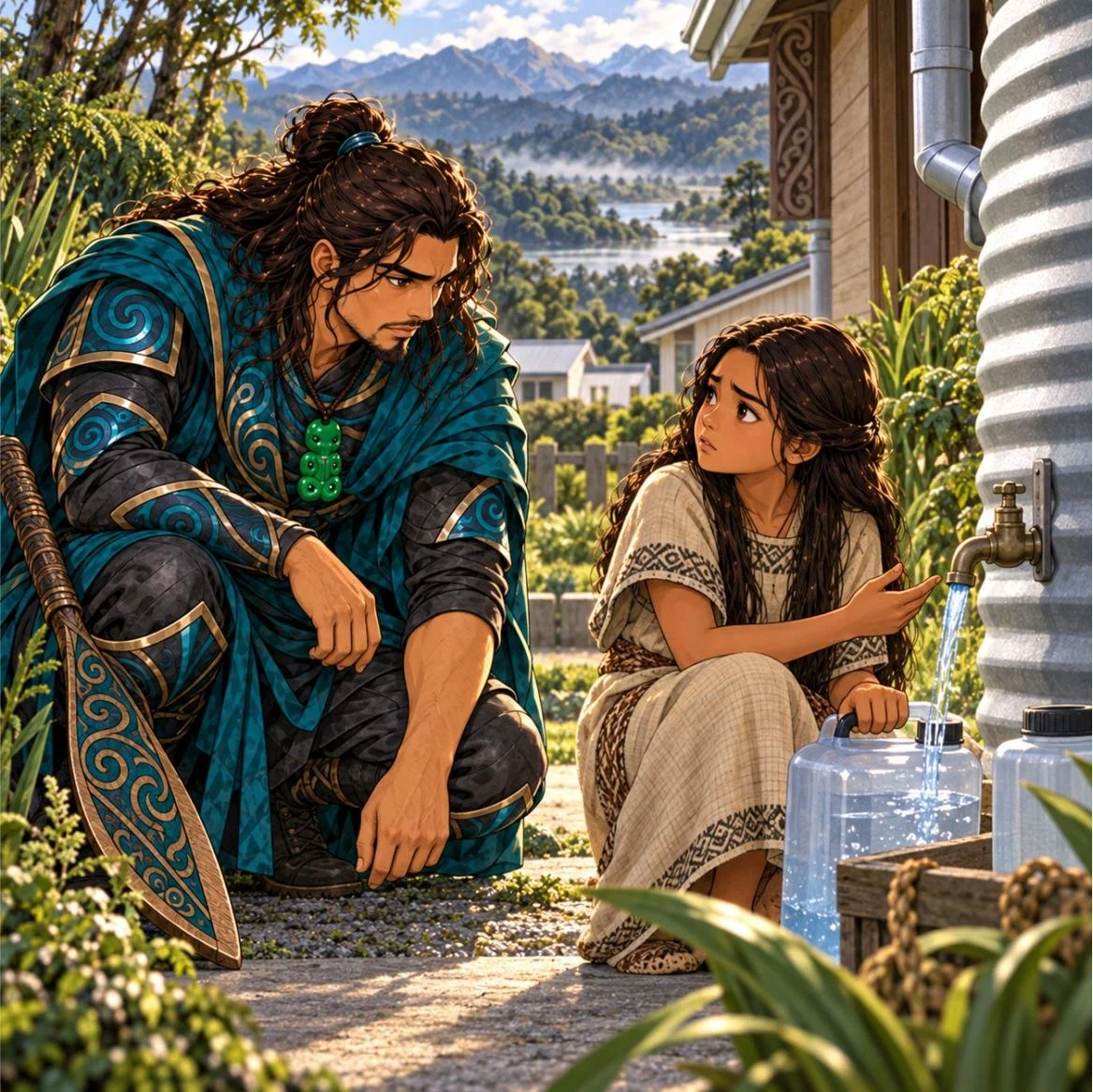
Near the kāinga (homes), Horowai met a girl named Anahera filling containers from a rainwater tank.
“My koro says we must stay away from the river,” she told him. “Some of our whānau are feeling sick.”
“I know,” Horowai replied. “The river is unwell too.”
Anahera looked at the hoe (paddle) resting across his shoulder.
“Can your powers fix it?”
Horowai looked towards the silent river.
“I can help it,” he said. “But I cannot heal it alone.”
Together, they continued upstream.
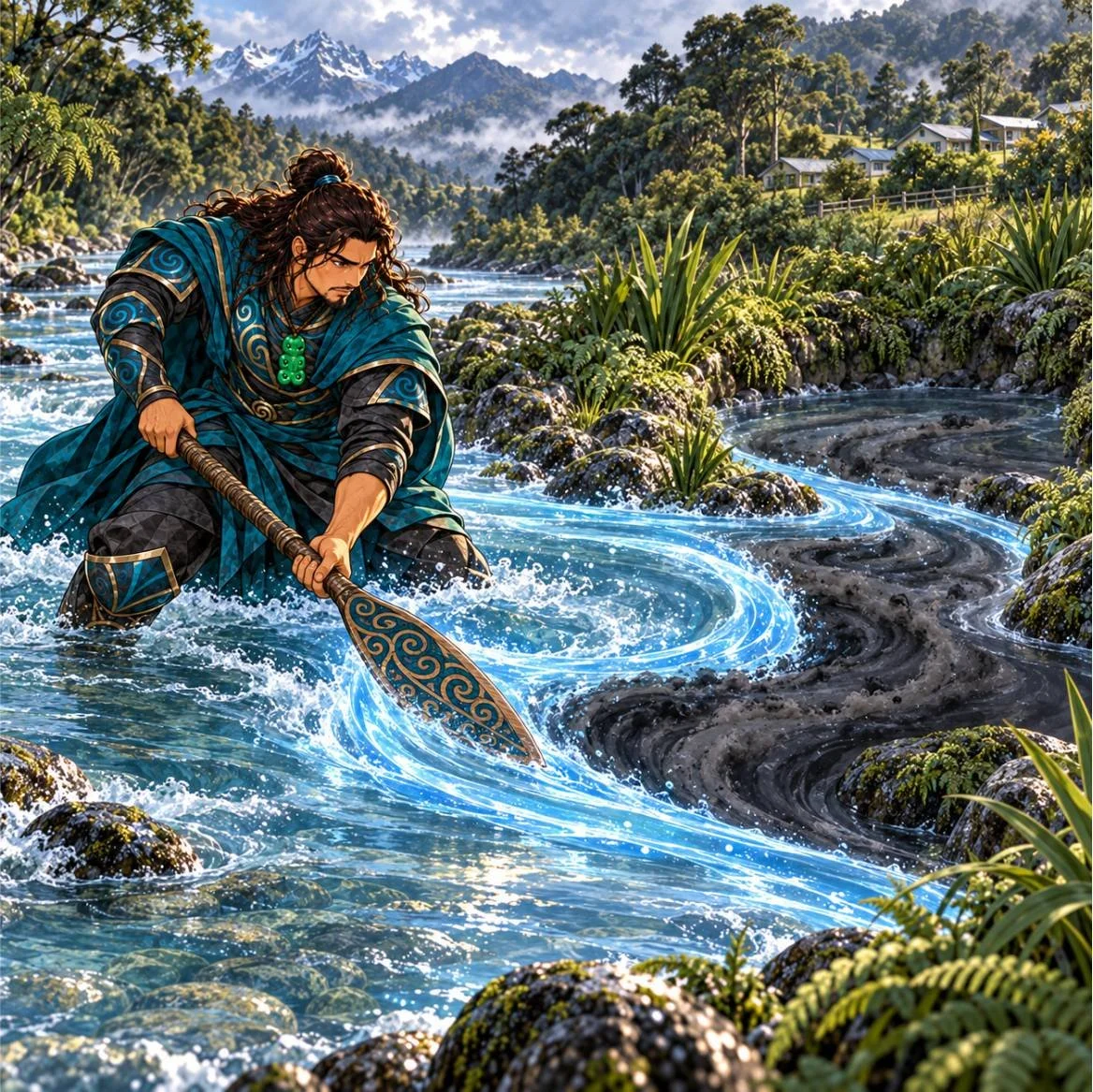
Beyond the last houses, they discovered a dark substance entering the river through a narrow drain. It spread beneath the surface like a shadow.
Horowai stepped into the water.
He swept his hoe through the current and called upon Te Ara o te Au - the Path of the Current. Ribbons of blue light curled around the dark water, guiding it away from the homes and into a hollow where it could no longer travel downstream.
The effort made Horowai’s arms tremble.
He raised his hoe again.
“Waiora!”
A clear wave rolled out from where he stood. The light moved through the river, lifting dirt and sickness from the water. Fish emerged from beneath the stones, and the current began to move again.
Anahera smiled.
“You did it!”
But Horowai shook his head.
The dark substance continued to trickle from the drain.
“I have given the river time,” he said. “But unless we stop what is harming it, the sickness will return.”
Anahera ran back to the villiage and told her whānau what they had found.
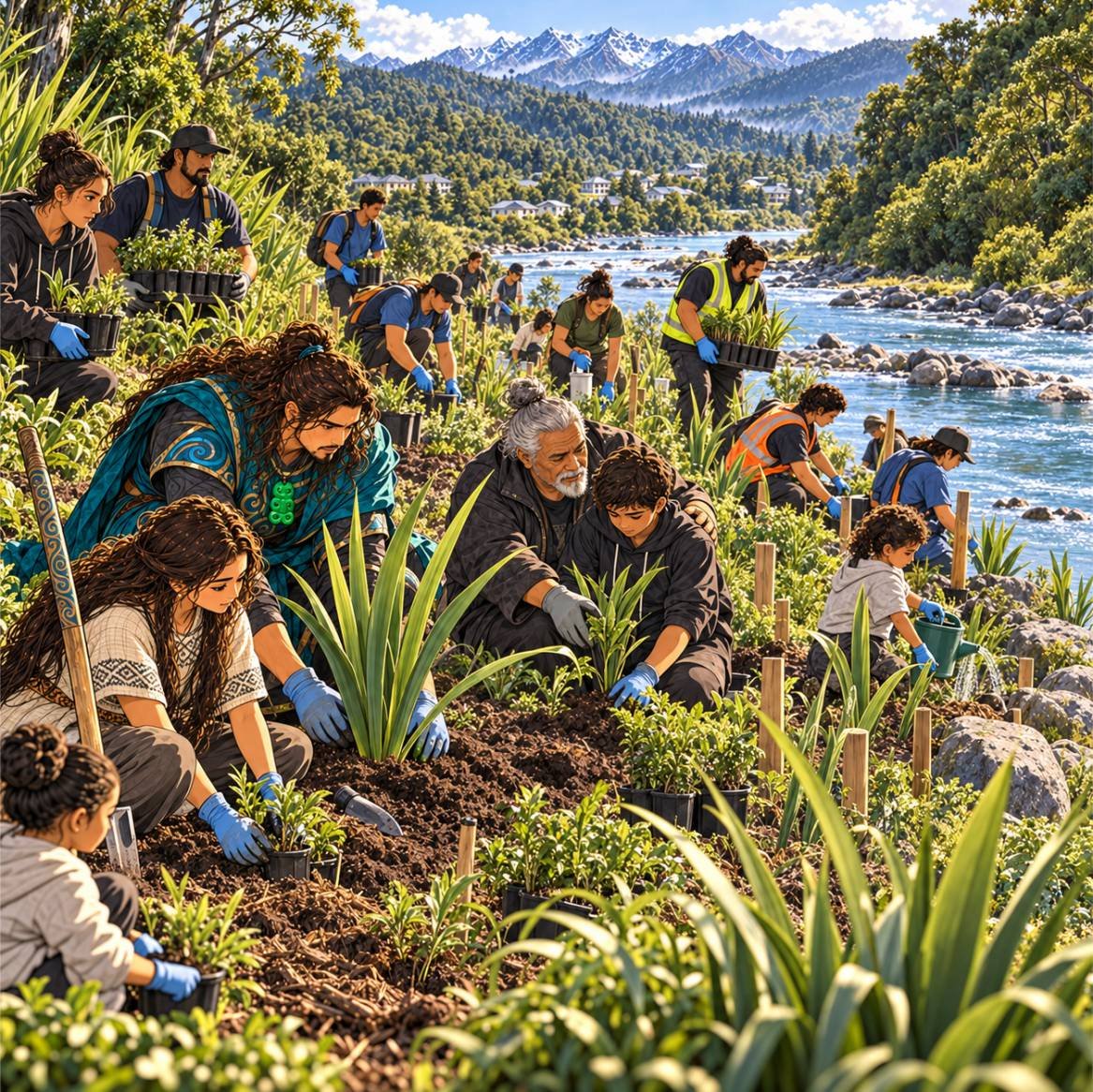
Soon, people came from every direction. Some carried tools. Others brought buckets, gloves and testing equipment. The kaumātua shared what they remembered about the awa. Local workers traced the drain beyond the hill and discovered a damaged storage tank leaking into the waterway.
Everyone had something to contribute.
The leak was stopped. The contaminated ground was carefully removed. Whānau planted harakeke (flax) along the bank to help filter the rainwater before it entered the river.
Horowai worked beside them.
He carried stones, cleared rubbish and listened as the tamariki shared ideas for protecting the water in the future. Nobody was too young to help, and nobody’s contribution was too small.
As evening approached, rain began falling heavily across the valley.
Water rushed down the hillsides towards the weakened river. The newly planted banks started to give way.
Horowai stood between the rising current and the whānau.
He drove his hoe into the water.
“Hoe Āwhā!”
A powerful surge rose before him, glowing beneath the darkening sky. Horowai turned his hoe, guiding the flood away from the damaged bank and back towards the centre of the river.
The force pushed against him.
His feet slipped.
For one frightening moment, Horowai tried to hold the entire current by himself.
Then he heard Anahera calling from the bank.
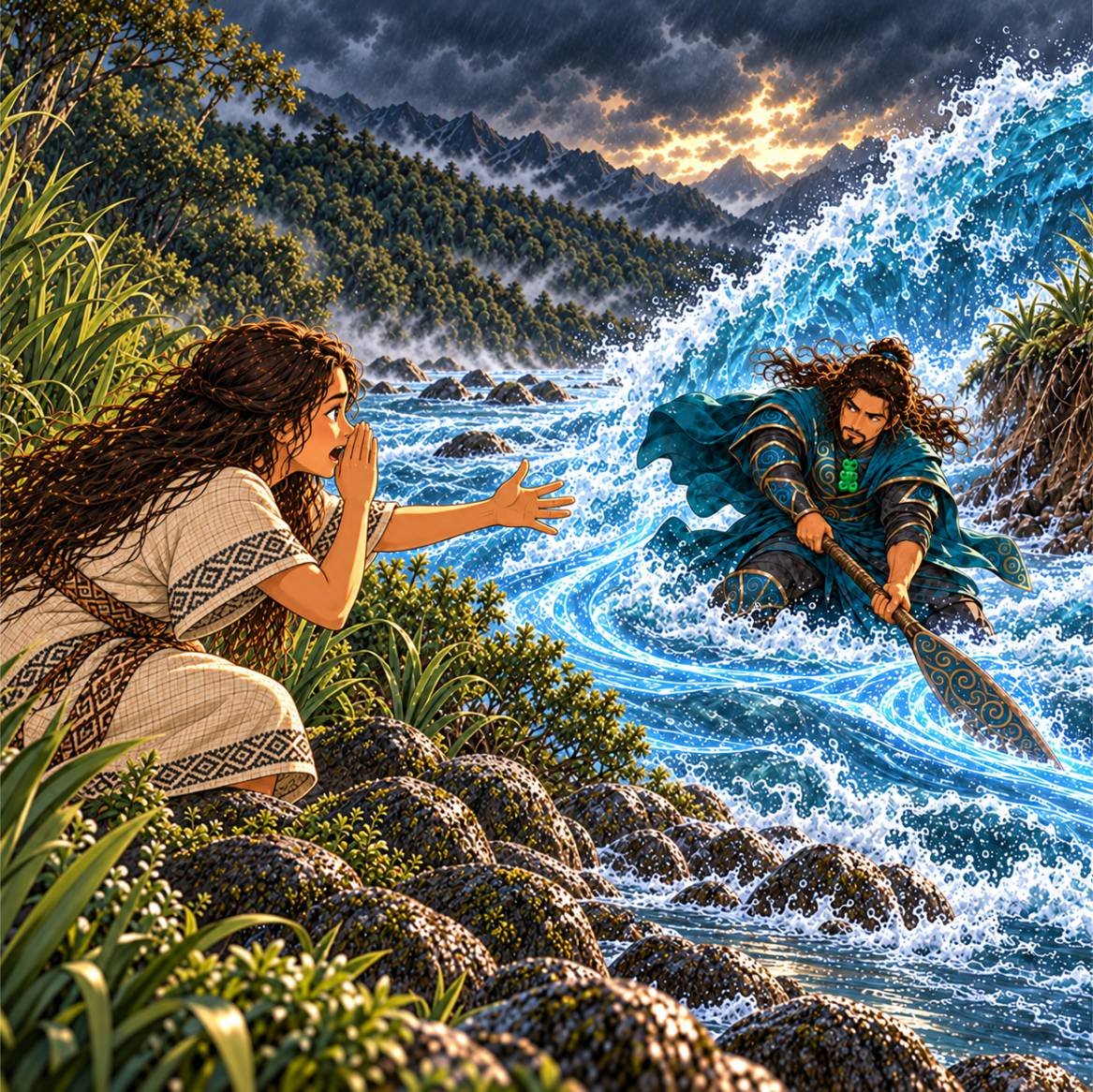
“You don’t have to carry it alone!”
The whānau worked together, placing stones and woven barriers along the weakest parts of the riverbank. Their combined effort slowed the rushing water.
With their help, Horowai steadied himself and guided the final surge safely downstream.
Then, slowly, the rain eased.
The people stood together beside the river. They were wet, muddy and exhausted—but they were safe.
From beneath the stones came a familiar sound.
A gentle murmur.
Then a ripple.
Then the joyful movement of water dancing around the bend.
The river was singing again.
Anahera stood beside Horowai.
“Did we heal it?”
“We have begun,” he replied. “Now we must keep listening.”
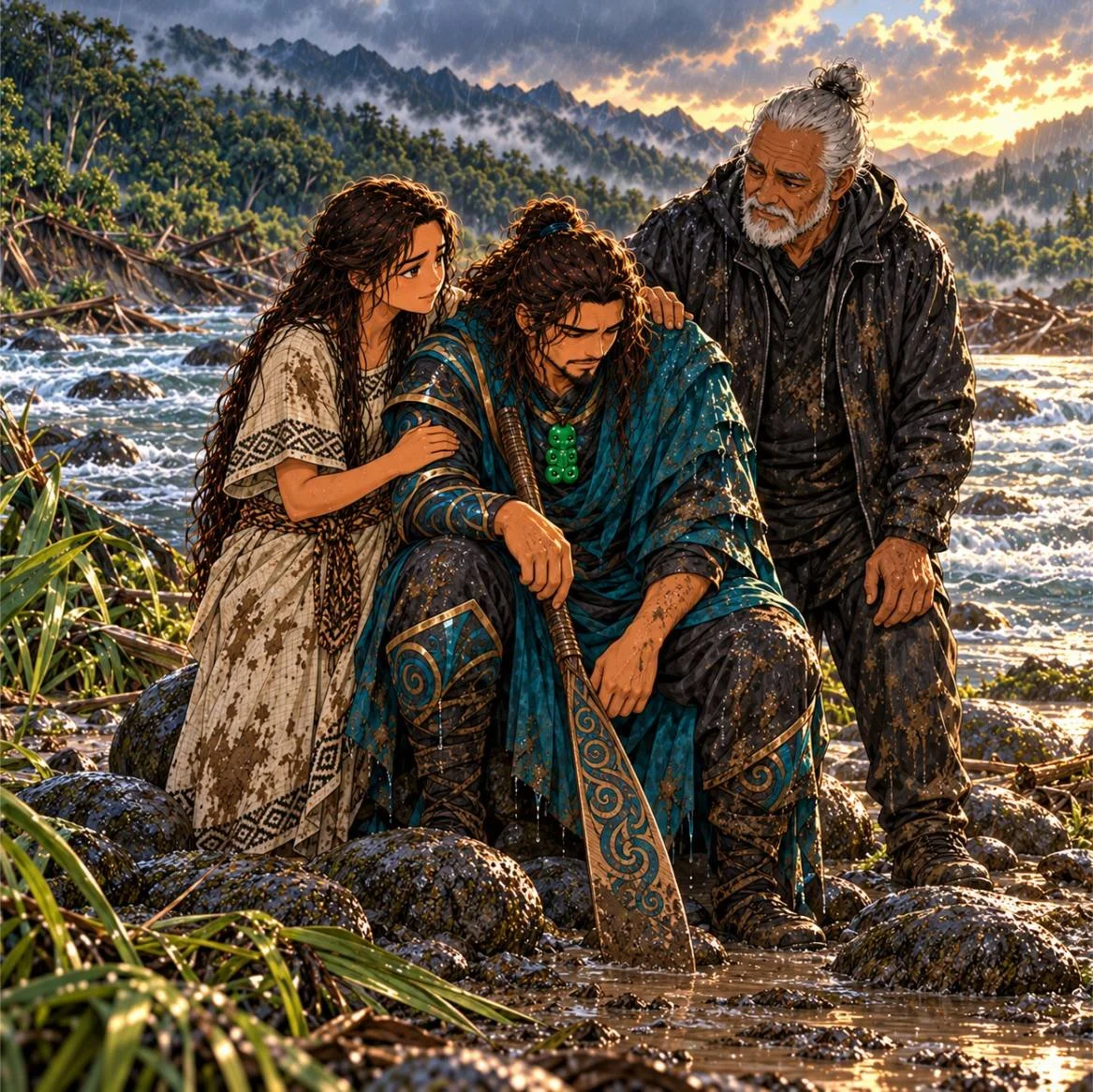
In the weeks that followed, the whānau continued caring for the river. They tested the water, planted along its banks and taught the tamariki how to recognise when it needed help.
Horowai visited often, but he never claimed the river as his own.
He knew that his abilities could redirect a flood, cleanse the water and protect people from danger. But the strongest power he had witnessed belonged to the community.
It was the power of whānau working together.
And wherever the awa carried its song, it carried that lesson with it:
When we care for the water, we care for the whenua.
When we care for the whenua, we care for our whānau.